The Politics Of Glastonbury
“You Can Never Be Too Rich or Too Thin” is commonly attributed to the Duchess of Windsor. What we may have learned from this year’s Glastonbury is that it may be the case you can have too much free speech, even if you agree with it. Indeed, the past few days at Worth Farm have highlighted issues regarding not only free speech, but also the lay of the land as far as politics is concerned at the moment. Going into this week we are nearly a year on from the Southport riots and the two tier allegations that it unearthed. Key among these is that those on the left can say whatever they want, on social media and beyond.
But those on the right risk being silenced / locked up. The current conventional view on the left / right split on Israel / Palestine is that those on the left are pro Palestine, and those on the right pro-Israel. It would also be generally accepted that the spirit of Glastonbury is a left leaning one, and so pro-Palestinian flags are allowed to flutter happily in the breeze by the Pyramid Stage. Of course, a possible flaw in people freely expressing their views is that people with the opposite view may not take kindly to it, or find it offensive. This has happened, and then of course we get down the incitement to violence trope, where the politicians and the police wheel themselves in. Of course, the law has already decided that the wrong words can be a criminal offence, even if there is no audit trail between the inciter and the person that commits violence. Both get banged up.
At least for the time being, all of the controversy this weekend has been words, and in a place that on the face of it represents human freedom at its most free. It is therefore ironic that via Bob Vylan, Kneecap and the Palestinian cause, the festival has been clouded by politics. Perhaps after 55 years the organisers should consider that one of the worlds greatest music events should stick to being just about the music, rather than risking tarnishing the brand with the issues of the day unless it knows where the line is between free speech and hate speech.
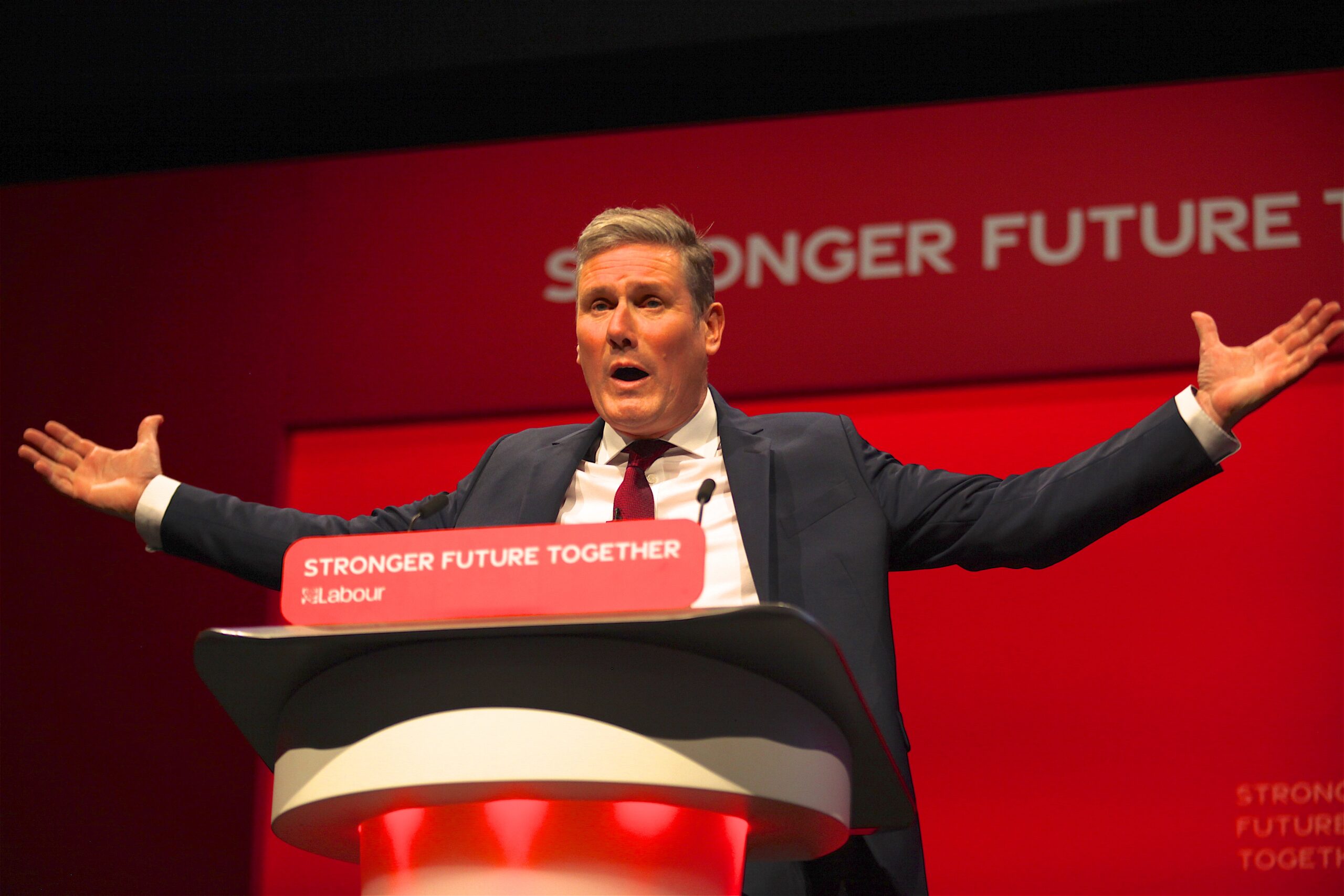
Keir Starmer And The World Stage
It must be wonderful being a G7 leader, flitting around on the world stage, wracking up those airmiles, and generally enjoying the best trappings of power. This contrasts with the cut and thrust of day to day politics, having to face down pretenders to your thrown, and worrying about being re-elected. Perhaps the classic example of how the gallivanting can go wrong was Prime Minister Thatcher going to Paris while in the middle of a leadership election, rather than scraping around for the few votes she needed to avoid a second ballot. But alas, the need for adulation meant defeat at the hands of her Conservative peers, and the end of 11 years in power.
Presumably, our current leader Sir Keir Starmer is starting to learn a similar lesson, or at least he is using the foreign affairs focus excuse to explain his failure over welfare cuts. From this apparent mea culpa there are at least a couple of points to consider. The first is whether Starmer is actually genuine in terms of his “the dog ate my homework” travel excuse. The second is whether he has any impact on the world stage? At least as things stand, one wonders how many of his fellow leaders know him or his values that well. After all, one would wonder if his electorate know what he stands for. So far his brand is of “Two Tier” and other much worse nicknames, plus all the upset provided to private school parents, unheated pensioners, employers paying national insurance, fisherman, rich people leaving the company, the list goes on.
While all of this may be first year in government teething troubles, the rebellion U-turn make it understandable that anyone in his position might wish to jet off to foreign climes as much as possible. Especially the case when the leader of the free world describes you as doing a “very good job” and a “very good person”, something that one would guess only a small proportion of the UK population might agree with. Trump’s praise aside, for someone who is clearly not a people person, not good on camera (or great anywhere else), the idea of getting away from it all must be quite tempting. Alas we know that the UK’s position on the world stage is miniscule, Starmer has few leadership qualities, and given the risk of recession, further tax rises and the migration crisis, all of his skills such as they are should be focused domestically.
Zoran Mamdani
One of the features of politics is the way it can turn into a yin and yang affair, with the pendulum not only swinging left and right, but also a firebrand on one side leading to one appearing on the other. We certainly had this during The Troubles in Northern Ireland, but it could be the case that opposing firebrands are being teed up following the nomination of Zoran Mamdani as the Democrat nominee for the New York mayoral election in November. This is likely to be as toxic a development for those of a Republican bias, as Donald Trump has been and still is for the Democrat. It may also be the case that with his potential power base in New York, Mamdani could be the kind of thorn in the side for Trump that Ken Livingstone was for Prime Minister Thatcher in the 1980s.
Indeed, Livingstone was so troublesome that Thatcher abolished the Greater London Council just to get rid of him. Presumably Trump will not do the equivalent, and indeed, such a confrontation may never happen. However, it is the case that some of New York’s rich are quaking in their boots at the prospect of taxes being raised on “whiter neighbourhoods”. Presumably, a right wing mayor could not do or say the same with black neighbourhoods, and Mr Mamdani has not thought of the idea of going with the slogan of lowering taxes for less white neighbourhoods. But whatever the possible future mayor of New York does, perhaps the real loss here is the way that politics which is class, race / sectarian driven, rather than fading, appears to be returning on both sides of the pond.


